

- January 10, 2026
Part II — Why Operational Tasks Deserve Serious Design
This is Part II of a five-part series on designing refill as an operational system in hospitality. If you haven’t read Part I, you can find it here.
In housekeeping operations the most important insights come from the actual environments where work happens. From watching routines unfold in real time. From noticing what people compensate for — without being asked.
Bathroom amenity refill is one of those routines. Not because it could be complex by design, but because it takes place in spaces that were never designed for it.
Where the work actually happens
Refill routines does not happen in presentations or process diagrams. It happens back-of-house, in storage areas, and service corridors.
These spaces are often:
- shared by multiple tasks
- shaped by what fits, not by what supports the work
- adjusted over time to “make things work”
Spend enough time in these environments and a pattern emerges. The work itself is rarely the issue. What’s missing are the tools designed to support it.

Back of the house. Not in the spotlight — but essential. This is where structure, quality, and flow are built.
Evidence lives in repetition, not opinion
When the same routine is performed repeatedly, across different people and locations, small signals start to repeat themselves:
- the same pauses
- the same adjustments
- the same moments of hesitation
They show where a task relies on memory instead of structure.
Where quality depends on experience rather than design, and where people quietly carry responsibility that instead should belong to the system.
Good design starts here, by observing what repeats, not by asking what should happen.
Designing for real conditions
Designing small operational tasks means designing for reality:
- interruptions
- varying experience levels
- time pressure
- shared spaces
It means assuming that attention will fluctuate and designing the task so it still works.
This kind of design is not created at a desk. It emerges from spending time in the environments where the work is done, and letting those conditions shape the decisions.
The goal is not to remove people from the process, it is to leda igenom och minimera…remove unnecessary burden from the work.

Designing for real conditions means being present where the work happens. By studying time, movement, and interruptions in real environments, we build an understanding of patterns.
Order as a design outcome
In environments where refill routines are clearly structured and supported, something subtle but important changes.
The space becomes calmer.
Steps follow a predictable sequence.
Things work as they are expected to, creating a sense of calm for the people working in it.
Structure reduces the need to double-check and lowers mental load.
It allows people to move through the task without constant correction.
This kind of order is not enforced. It emerges when the work is properly supported.
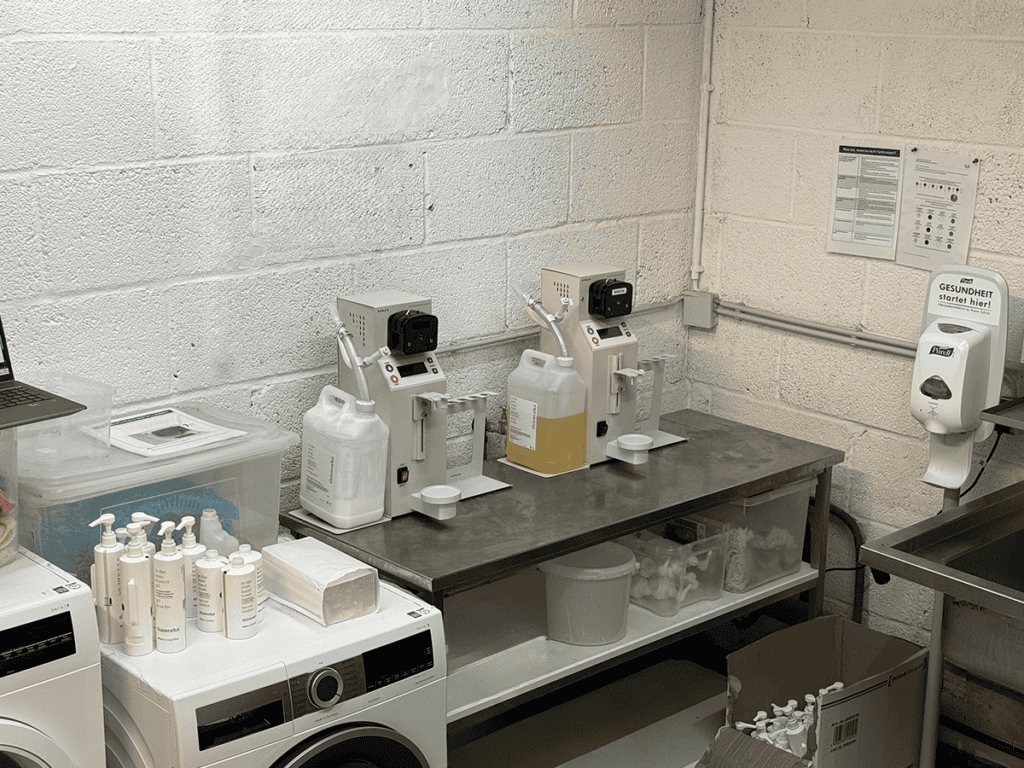
When everyday tasks are designed with care, the work becomes calmer and more predictable.
Why everyday environments matter
We focus on everyday operational spaces because they tell the truth about how systems perform.
Not in ideal conditions.
Not in isolated scenarios.
But in the reality of daily work.
Design decisions grounded in real people and real environments make operations easier to sustain and less dependent on constant attention.
That is why operational tasks deserve serious design.


